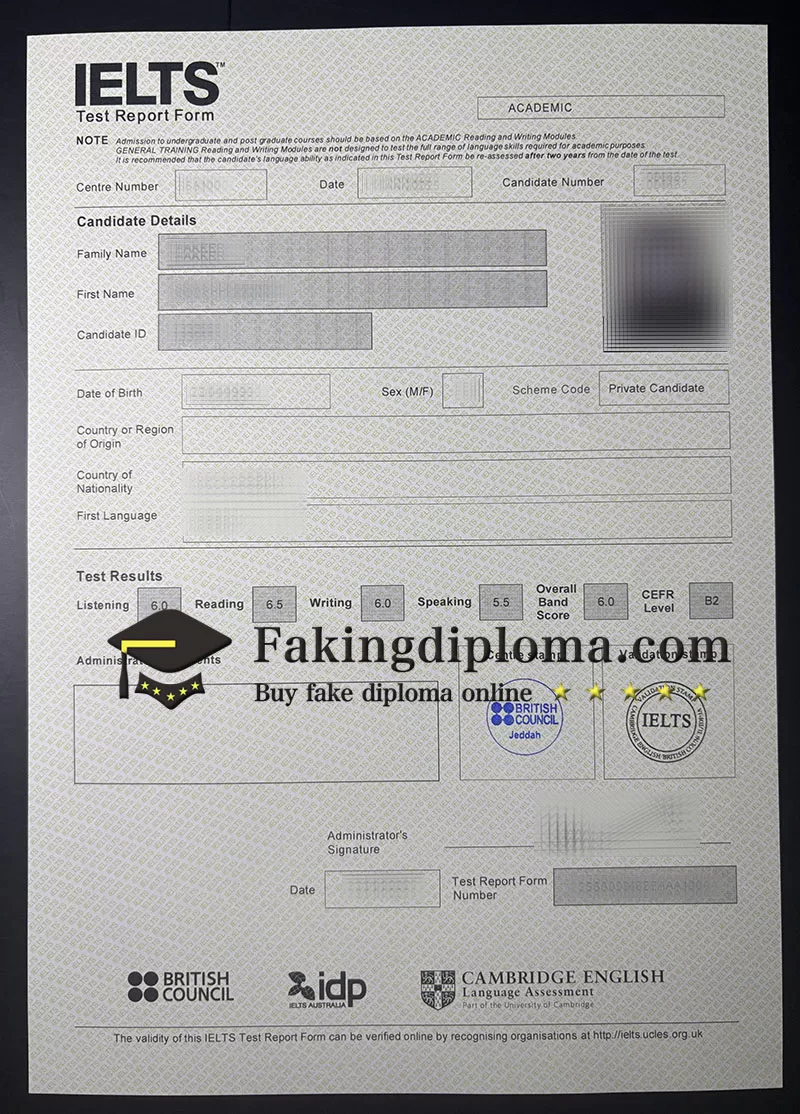
fake IELTS transcript
IELTS: Your Gateway to Global Opportunities
The International English Language Testing System, universally known as IELTS, is the world’s most popular high-stakes English language proficiency test for study, work, and migration. For millions of aspirants each year, a good IELTS score is a key that unlocks doors to international education, professional recognition, and a new life abroad.
What is IELTS? A Benchmark for Global Communication
How to order an IELTS transcript? IELTS is designed to assess the English language ability of non-native speakers who need to study or work in an environment where English is the primary language of communication. It is jointly managed by the British Council, IDP: IELTS Australia, and Cambridge Assessment English, ensuring its quality and global recognition.
The test is trusted by over 12,000 organizations worldwide, including universities, employers, professional bodies, and governments in major English-speaking countries like the UK, Australia, Canada, New Zealand, and many others.
The Two Paths: Academic vs. General Training
IELTS is not a one-size-fits-all test. It offers two formats tailored to the test-taker’s goals:
-
IELTS Academic: This version is intended for those applying for higher education (undergraduate or postgraduate courses) or professional registration (e.g., doctors, nurses). It assesses whether your English level is suitable for an academic environment, featuring more complex language and tasks related to academic study.
-
IELTS General Training: This version is for those migrating to an English-speaking country (like Australia, Canada, or the UK) or applying for secondary education, training programs, or work experience. It focuses on basic survival skills in broad social and workplace contexts.
The Four Pillars of Assessment
The IELTS test evaluates your English skills across four key modules, all taken on the same day in the order of Listening, Reading, and Writing, with the Speaking test often scheduled separately.
-
Listening (30 minutes): You will listen to four recorded monologues and conversations in a range of accents and answer 40 questions. This section tests your ability to understand main ideas, detailed information, opinions, and the purpose of an utterance.
-
Reading (60 minutes): The Reading component consists of 40 questions. For IELTS Academic, you will get three long texts from books, journals, magazines, and newspapers. For IELTS General Training, the texts are sourced from advertisements, company handbooks, official documents, and newspapers. This section tests skills like reading for gist, main ideas, detail, skimming, and understanding logical argument.
-
Writing (60 minutes): This module consists of two tasks.
-
Task 1 (Academic): Describe visual information (a graph, table, chart, or diagram) in your own words.
-
Task 1 (General Training): Write a letter (formal, semi-formal, or informal) requesting information or explaining a situation.
-
Task 2 (Both versions): Write an essay in response to a point of view, argument, or problem. This task carries more weight and requires you to present a clear, reasoned argument.
-
-
Speaking (11-14 minutes): This is a face-to-face interview with a certified examiner, divided into three parts:
-
Part 1: Introduction and interview on familiar topics (e.g., home, work, studies).
-
Part 2: You receive a cue card with a topic and have one minute to prepare before speaking for up to two minutes.
-
Part 3: A two-way discussion with the examiner on more abstract ideas and issues related to the Part 2 topic.
-